
I wouldn’t call myself a quilter. In fact the idea of buying gorgeous fabric just to cut up into little pieces to meticulously stitch back together again is a bit of a paradox to me. I love to reuse fabric or create from someone else’s scraps though.
Way back in university days I needed something to do with my hands, something that was easy to transport in my purse. So I started to make hexis. These were little two inch hexagons sewn together in a pattern which the quilting sisterhood calls The Grandmother’s Flower Garden. I had no idea what I was going to do with these 1-6-12 ringed dark-light-dark hexagons. I just kept sewing them. And they were sewn all BY HAND!
Skip ahead another ten years and tucked away in an old suitcase were probably 100 ‘flowers.’

So in 1991 I began piecing it all together. Now I had the top done.

I knew there was a woman in our small town who was glad to teach me how to make an actual quilt. So with the help of Willie Salts, and salty she was, I got the whole thing onto a quilting frame and again, quilted the whole thing by hand.
Fast forward until 2025….said quilt was showing signs of age. You see I had used a combination of 100% cotton and poly-cotton blend fabrics (anathema to real quilters) and the former deteriorated in the sun faster than the rest. Every time I touched the quilt my finger would go through, ripping down to the fibre-fill. Time had come for a repair job.


The trouble began when I tried to find similar fabrics to the 1980s. I sourced some used clothing at thrift which had a similar look to the tiny prints I had used but I had to break down and buy some new fabric to finish the project.
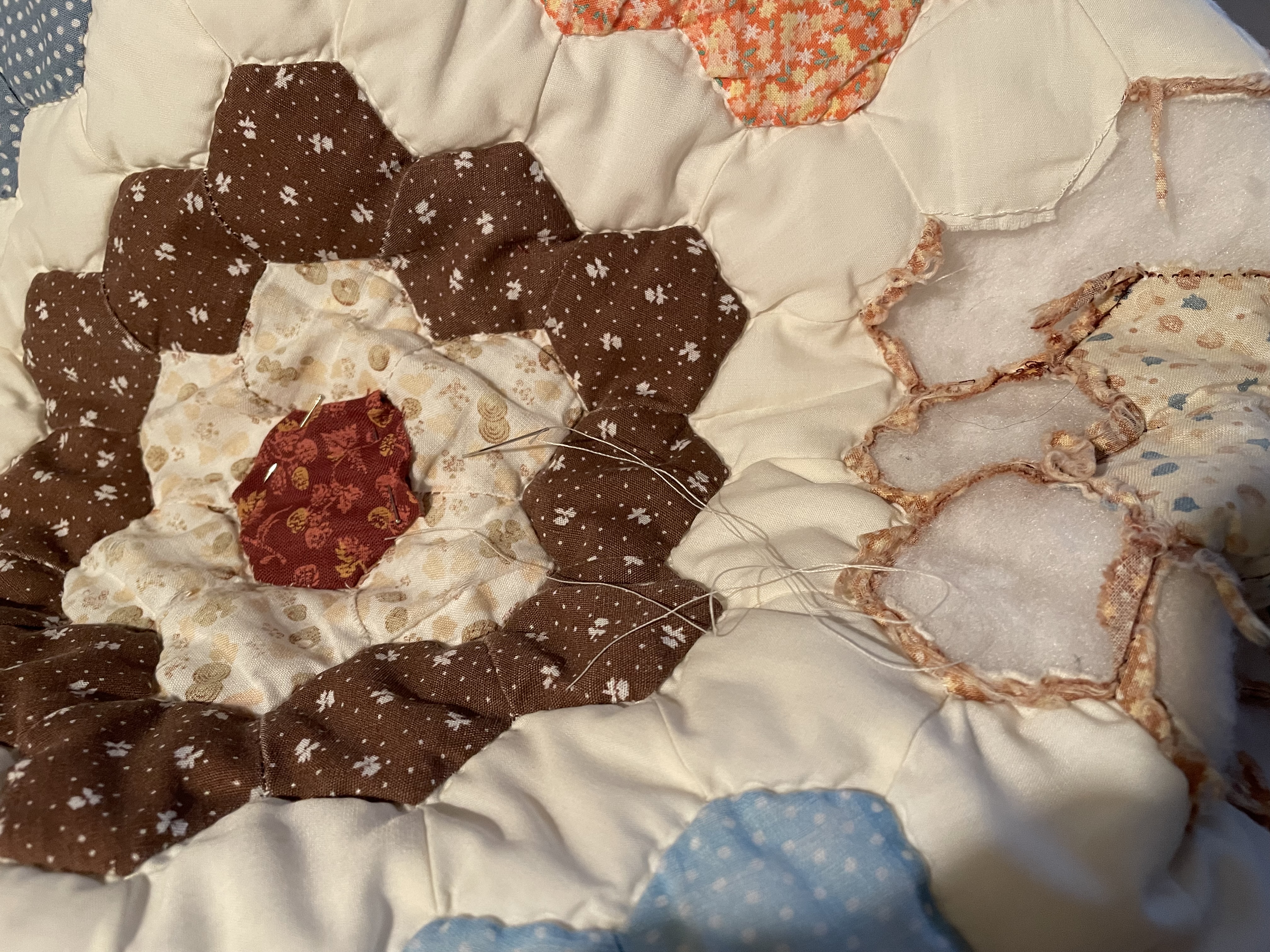
Each ‘flower’ takes three hours to stitch. There are over a 100 flowers. Thank goodness I used poly-cotton beige in-between! It didn’t wear out. So this summer I have repaired over half the flowers, sometimes ripping out the entire thing, sometimes just putting a new hexie over top. It has been an entirely satisfying endeavour. A labour of love.
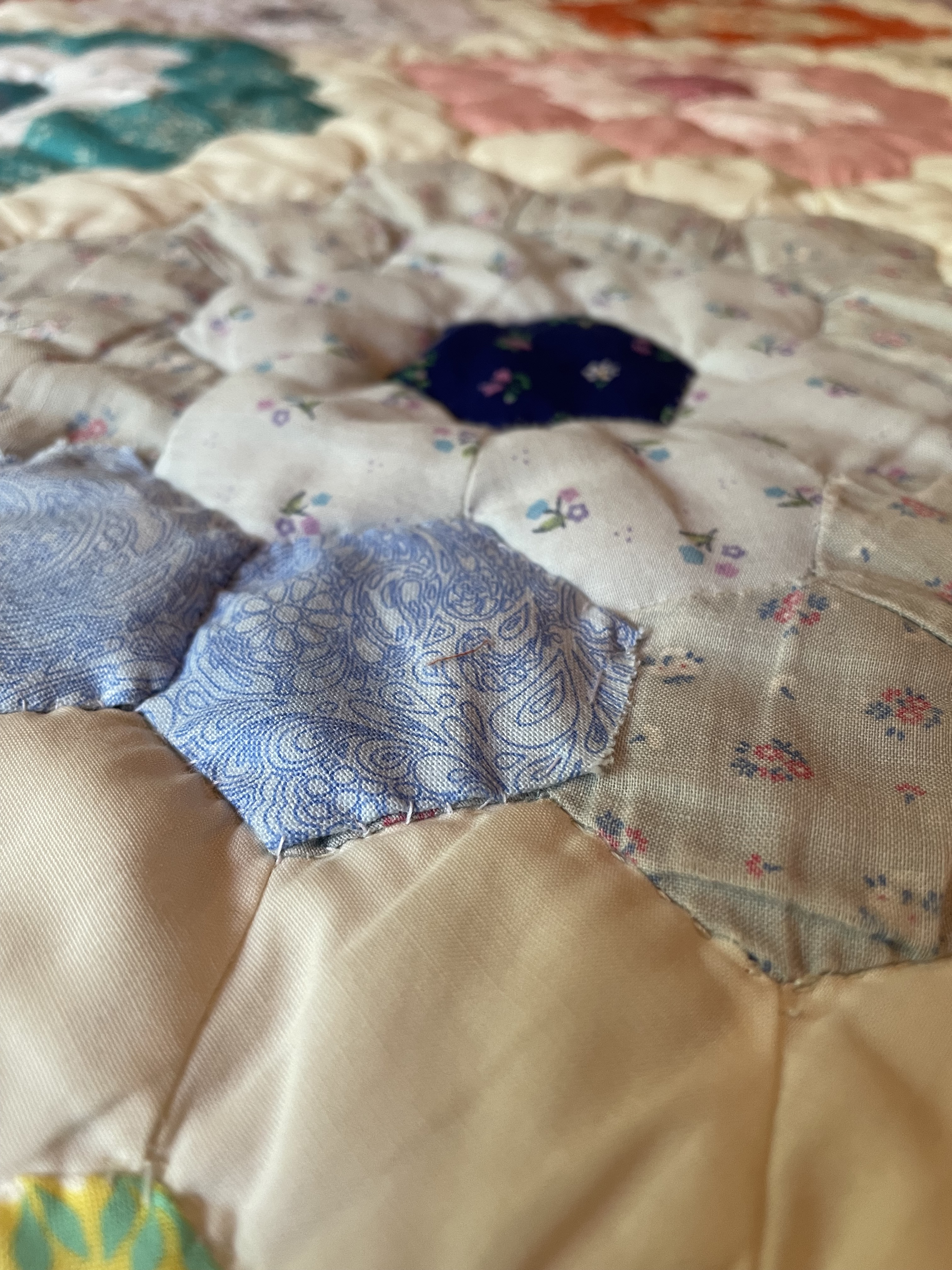
Skip to 2025 ….. I have been hard at work this summer writing the book I’ve been crafting for five years already.
When I turned 39 Sue Monk Kidd’s book Dance of the Dissident Daughter: A Woman’s Journey from Christian Tradition to the Sacred Feminine catapulted me into a crisis of faith and discovery of mystery which is still unfolding to this day. Her book was a watershed for me. She opens the book:
𝘐𝑡 𝑤𝘢𝑠 𝑎𝘶𝑡𝘶𝑚𝘯, 𝑎𝘯𝑑 𝑒𝘷𝑒𝘳𝑦𝘵ℎ𝘪𝑛𝘨 𝘸𝑎𝘴 𝘵𝑢𝘳𝑛𝘪𝑛𝘨 𝘭𝑜𝘰𝑠𝘦. 𝐼 𝑤𝘢𝑠 𝑟𝘶𝑛𝘯𝑖𝘯𝑔 𝑒𝘳𝑟𝘢𝑛𝘥𝑠 𝑡𝘩𝑎𝘵 𝘢𝑓𝘵𝑒𝘳𝑛𝘰𝑜𝘯. 𝑅𝘢𝑖𝘯 𝘩𝑎𝘥 𝘧𝑎𝘭𝑙𝘦𝑛 𝑒𝘢𝑟𝘭𝑖𝘦𝑟, 𝘣𝑢𝘵 𝘯𝑜𝘸 𝘵ℎ𝘦 𝘴𝑢𝘯 𝘸𝑎𝘴 𝘰𝑢𝘵, 𝑠𝘩𝑖𝘯𝑖𝘯𝑔 𝑜𝘯 𝘵ℎ𝘦 𝘵𝑖𝘯𝑦 𝑏𝘦𝑎𝘥𝑠 𝑜𝘧 𝘸𝑎𝘵𝑒𝘳 𝘵ℎ𝘢𝑡 𝑐𝘭𝑢𝘯𝑔 𝑡𝘰 𝘵ℎ𝘦 𝘵𝑟𝘦𝑒𝘴 𝘢𝑛𝘥 𝘴𝑖𝘥𝑒𝘸𝑎𝘭𝑘𝘴. 𝐼 𝑝𝘢𝑟𝘬𝑒𝘥 𝘪𝑛 𝑓𝘳𝑜𝘯𝑡 𝑜𝘧 𝘵ℎ𝘦 𝘥𝑟𝘶𝑔𝘴𝑡𝘰𝑟𝘦 𝘸ℎ𝘦𝑟𝘦 𝘮𝑦 𝑑𝘢𝑢𝘨ℎ𝘵𝑒𝘳, 𝐴𝘯𝑛, 𝘧𝑜𝘶𝑟𝘵𝑒𝘦𝑛, 𝘩𝑎𝘥 𝘢𝑛 𝑎𝘧𝑡𝘦𝑟-𝑠𝘤ℎ𝘰𝑜𝘭 𝘫𝑜𝘣. 𝐿𝘦𝑎𝘱𝑖𝘯𝑔 𝑎 𝑝𝘶𝑑𝘥𝑙𝘦, 𝐼 𝑤𝘦𝑛𝘵 𝘪𝑛𝘴𝑖𝘥𝑒.
𝐼 𝑠𝘱𝑜𝘵𝑡𝘦𝑑 ℎ𝘦𝑟 𝑟𝘪𝑔𝘩𝑡 𝑎𝘸𝑎𝘺 𝘬𝑛𝘦𝑒𝘭𝑖𝘯𝑔 𝑜𝘯 𝘵ℎ𝘦 𝘧𝑙𝘰𝑜𝘳 𝘪𝑛 𝑡𝘩𝑒 𝑡𝘰𝑜𝘵ℎ𝘱𝑎𝘴𝑡𝘦 𝘴𝑒𝘤𝑡𝘪𝑜𝘯, 𝑠𝘵𝑜𝘤𝑘𝘪𝑛𝘨 𝘢 𝘣𝑜𝘵𝑡𝘰𝑚 𝑠𝘩𝑒𝘭𝑓. 𝘐 𝘸𝑎𝘴 𝘢𝑏𝘰𝑢𝘵 𝘵𝑜 𝑤𝘢𝑙𝘬 𝘰𝑣𝘦𝑟 𝑎𝘯𝑑 𝑠𝘢𝑦 ℎ𝘦𝑙𝘭𝑜 𝑤𝘩𝑒𝘯 𝘐 𝘯𝑜𝘵𝑖𝘤𝑒𝘥 𝘵𝑤𝘰 𝘮𝑖𝘥𝑑𝘭𝑒-𝑎𝘨𝑒𝘥 𝘮𝑒𝘯 𝘸𝑎𝘭𝑘𝘪𝑛𝘨 𝘢𝑙𝘰𝑛𝘨 𝘵ℎ𝘦 𝘢𝑖𝘴𝑙𝘦 𝘵𝑜𝘸𝑎𝘳𝑑 ℎ𝘦𝑟. 𝘛ℎ𝘦𝑦 𝑙𝘰𝑜𝘬𝑒𝘥 𝘭𝑖𝘬𝑒 𝑒𝘷𝑒𝘳𝑦𝘣𝑜𝘥𝑦’𝑠 𝑓𝘢𝑡𝘩𝑒𝘳. 𝑇𝘩𝑒𝘺 𝘩𝑎𝘥 𝘮𝑜𝘶𝑠𝘴𝑒𝘥 𝘩𝑎𝘪𝑟 𝑎𝘯𝑑 𝑤𝘰𝑟𝘦 𝘬𝑛𝘪𝑡 𝑠𝘱𝑜𝘳𝑡 𝑠𝘩𝑖𝘳𝑡𝘴 𝘵ℎ𝘦 𝘤𝑜𝘭𝑜𝘳 𝘰𝑓 𝐸𝘢𝑠𝘵𝑒𝘳 𝘦𝑔𝘨𝑠, 𝘵ℎ𝘦 𝘬𝑖𝘯𝑑 𝑜𝘧 𝘴ℎ𝘪𝑟𝘵𝑠 𝑤𝘪𝑡𝘩 𝘵𝑖𝘯𝑦 𝑎𝘭𝑙𝘪𝑔𝘢𝑡𝘰𝑟𝘴 𝘴𝑒𝘸𝑛 𝑎𝘵 𝘵ℎ𝘦 𝘤ℎ𝘦𝑠𝘵. 𝐼𝘵 𝘸𝑎𝘴 𝘢 𝘥𝑒𝘵𝑎𝘪𝑙 𝐼 𝑤𝘰𝑢𝘭𝑑 𝑟𝘦𝑚𝘦𝑚𝘣𝑒𝘳 𝘭𝑎𝘵𝑒𝘳 𝘢𝑠 ℎ𝘢𝑣𝘪𝑛𝘨 𝘪𝑟𝘰𝑛𝘪𝑐 𝑠𝘺𝑚𝘣𝑜𝘭𝑖𝘴𝑚.
𝑀𝘺 𝘥𝑎𝘶𝑔𝘩𝑡𝘦𝑟 𝑑𝘪𝑑 𝑛𝘰𝑡 𝑠𝘦𝑒 𝑡𝘩𝑒𝘮 𝘤𝑜𝘮𝑖𝘯𝑔. 𝘒𝑛𝘦𝑒𝘭𝑖𝘯𝑔 𝑜𝘯 𝘵ℎ𝘦 𝘧𝑙𝘰𝑜𝘳, 𝑠𝘩𝑒 𝑤𝘢𝑠 𝑖𝘯𝑡𝘦𝑛𝘵 𝘰𝑛 𝑔𝘦𝑡𝘵𝑖𝘯𝑔 𝑡𝘩𝑒 𝑏𝘰𝑥𝘦𝑠 𝑜𝘧 𝘊𝑟𝘦𝑠𝘵 𝘭𝑖𝘯𝑒𝘥 𝘶𝑝 𝑒𝘷𝑒𝘯𝑙𝘺. 𝑇𝘩𝑒 𝑚𝘦𝑛 𝑠𝘵𝑜𝘱𝑝𝘦𝑑, 𝘱𝑒𝘦𝑟𝘦𝑑 𝑑𝘰𝑤𝘯 𝘢𝑡 ℎ𝘦𝑟. 𝘖𝑛𝘦 𝘮𝑎𝘯 𝘯𝑢𝘥𝑔𝘦𝑑 𝑡𝘩𝑒 𝑜𝘵ℎ𝘦𝑟. 𝘏𝑒 𝑠𝘢𝑖𝘥, “𝘕𝑜𝘸 𝘵ℎ𝘢𝑡’𝑠 ℎ𝘰𝑤 𝐼 𝑙𝘪𝑘𝘦 𝘵𝑜 𝑠𝘦𝑒 𝑎 𝑤𝘰𝑚𝘢𝑛— 𝘰𝑛 ℎ𝘦𝑟 𝑘𝘯𝑒𝘦𝑠.”
𝘛ℎ𝘦 𝘰𝑡𝘩𝑒𝘳 𝘮𝑎𝘯 𝘭𝑎𝘶𝑔𝘩𝑒𝘥.
𝘐 𝘴𝑡𝘰𝑜𝘥 𝘧𝑟𝘰𝑧𝘦𝑛 𝑖𝘯 𝘵ℎ𝘦 𝘯𝑒𝘹𝑡 𝑎𝘪𝑠𝘭𝑒. 𝘐 𝘸𝑎𝘵𝑐𝘩𝑒𝘥 𝘵ℎ𝘦 𝘦𝑥𝘱𝑟𝘦𝑠𝘴𝑖𝘰𝑛 𝑡𝘩𝑎𝘵 𝘤𝑟𝘦𝑝𝘵 𝘪𝑛𝘵𝑜 𝑚𝘺 𝘥𝑎𝘶𝑔𝘩𝑡𝘦𝑟’𝑠 𝑒𝘺𝑒𝘴 𝘢𝑠 𝑠𝘩𝑒 𝑙𝘰𝑜𝘬𝑒𝘥 𝘶𝑝.
𝑆𝘦𝑒𝘪𝑛𝘨 𝘩𝑒𝘳 𝘬𝑛𝘦𝑒𝘭 𝘢𝑡 𝑡𝘩𝑒𝘴𝑒 𝑚𝘦𝑛’𝑠 𝑓𝘦𝑒𝘵 𝘸ℎ𝘪𝑙𝘦 𝘵ℎ𝘦𝑦 𝑙𝘢𝑢𝘨ℎ𝘦𝑑 𝑎𝘵 𝘩𝑒𝘳 𝘴𝑢𝘣𝑜𝘳𝑑𝘪𝑛𝘢𝑡𝘦 𝘱𝑜𝘴𝑡𝘶𝑟𝘦 𝘱𝑖𝘦𝑟𝘤𝑒𝘥 𝘮𝑒 𝑡𝘩𝑟𝘰𝑢𝘨ℎ.
𝑇𝘩𝑒 𝑚𝘦𝑛’𝑠 𝑙𝘢𝑢𝘨ℎ𝘵𝑒𝘳 𝘴𝑒𝘦𝑚𝘦𝑑 𝑡𝘰 𝘨𝑜 𝑜𝘯 𝘢𝑛𝘥 𝘰𝑛. 𝘐 𝘤𝑜𝘶𝑙𝘥 𝘩𝑎𝘳𝑑𝘭𝑦 𝑚𝘰𝑣𝘦. 𝐼 𝑓𝘦𝑙𝘵 𝘭𝑖𝘬𝑒 𝑎 𝑠𝘮𝑎𝘭𝑙 𝑎𝘯𝑖𝘮𝑎𝘭 𝘪𝑛 𝑡𝘩𝑒 𝑟𝘰𝑎𝘥, 𝑏𝘭𝑖𝘯𝑑𝘦𝑑 𝑏𝘺 𝘵ℎ𝘦 𝘭𝑖𝘨ℎ𝘵 𝘰𝑓 𝑎 𝑡𝘳𝑢𝘤𝑘, 𝘬𝑛𝘰𝑤𝘪𝑛𝘨 𝘴𝑜𝘮𝑒 𝑡𝘦𝑟𝘳𝑖𝘣𝑙𝘦 𝘤𝑜𝘭𝑙𝘪𝑠𝘪𝑜𝘯 𝘪𝑠 𝑐𝘰𝑚𝘪𝑛𝘨 𝘣𝑢𝘵 𝘶𝑛𝘢𝑏𝘭𝑒 𝑡𝘰 𝘮𝑜𝘷𝑒. 𝘐 𝘴𝑡𝘢𝑟𝘦𝑑 𝑎𝘵 𝘮𝑦 𝑑𝘢𝑢𝘨ℎ𝘵𝑒𝘳 𝘰𝑛 ℎ𝘦𝑟 𝑘𝘯𝑒𝘦𝑠 𝑏𝘦f𝘰𝑟𝘦 𝘵ℎ𝘦𝑠𝘦 𝘮𝑒𝘯 𝘢𝑛𝘥 𝘤𝑜𝘶𝑙𝘥 𝘯𝑜𝘵 𝘭𝑜𝘰𝑘 𝑎𝘸𝑎𝘺. 𝑆𝘰𝑚𝘦ℎ𝘰𝑤 𝑠𝘩𝑒 𝑠𝘦𝑒𝘮𝑒𝘥 𝘮𝑜𝘳𝑒 𝑡𝘩𝑎𝘯 𝘮𝑦 𝑑𝘢𝑢𝘨ℎ𝘵𝑒𝘳; 𝑠𝘩𝑒 𝑤𝘢𝑠 𝑚𝘺 𝘮𝑜𝘵ℎ𝘦𝑟, 𝘮𝑦 𝑔𝘳𝑎𝘯𝑑𝘮𝑜𝘵ℎ𝘦𝑟, 𝘢𝑛𝘥 𝘮𝑦𝘴𝑒𝘭𝑓. 𝘚ℎ𝘦 𝘸𝑎𝘴 𝘦𝑣𝘦𝑟𝘺 𝘸𝑜𝘮𝑎𝘯 𝘦𝑣𝘦𝑟 𝑏𝘰𝑟𝘯, 𝑏𝘦𝑛𝘵 𝘢𝑛𝘥 𝘤𝑜𝘯𝑡𝘢𝑖𝘯𝑒𝘥 𝘪𝑛 𝑎 𝑠𝘮𝑎𝘭𝑙, 𝘢𝑔𝘦𝑙𝘦𝑠𝘴 𝘤𝑎𝘮𝑒𝘰 𝘵ℎ𝘢𝑡 𝑏𝘰𝑟𝘦 𝘵ℎ𝘦 𝘵𝑟𝘶𝑡𝘩 𝘢𝑏𝘰𝑢𝘵 “𝑎 𝑤𝘰𝑚𝘢𝑛’𝑠 𝑝𝘭𝑎𝘤𝑒.”
𝘐𝑛 𝑡𝘩𝑒 𝑝𝘳𝑜𝘧𝑖𝘭𝑒 𝑜𝘧 𝘮𝑦 𝑑𝘢𝑢𝘨ℎ𝘵𝑒𝘳 𝘐 𝘴𝑎𝘸 𝘵ℎ𝘦 𝘴𝑢𝘧𝑓𝘦𝑟𝘪𝑛𝘨 𝘰𝑓 𝑤𝘰𝑚𝘦𝑛, 𝘵ℎ𝘦 𝘤𝑜𝘯𝑓𝘪𝑛𝘪𝑛𝘨 𝘰𝑓 𝑡𝘩𝑒 𝑓𝘦𝑚𝘪𝑛𝘪𝑛𝘦 𝘵𝑜 𝑝𝘭𝑎𝘤𝑒𝘴 𝘰𝑓 𝑖𝘯𝑓𝘦𝑟𝘪𝑜𝘳𝑖𝘵𝑦, 𝘢𝑛𝘥 𝘐 𝘦𝑥𝘱𝑒𝘳𝑖𝘦𝑛𝘤𝑒𝘥 𝘢 𝘤𝑜𝘭𝑙𝘪𝑠𝘪𝑜𝘯 𝘰𝑓 𝑙𝘰𝑣𝘦 𝘢𝑛𝘥 𝘱𝑎𝘪𝑛 𝑠𝘰 𝘨𝑟𝘦𝑎𝘵 𝘐 𝘩𝑎𝘥 𝘵𝑜 𝑟𝘦𝑎𝘤ℎ 𝑓𝘰𝑟 𝑡𝘩𝑒 𝑐𝘰𝑢𝘯𝑡𝘦𝑟 𝑎𝘯𝑑 𝑏𝘳𝑎𝘤𝑒 𝑚𝘺𝑠𝘦𝑙𝘧.

In fact I came across a poem I wrote after reading Sue Monk Kidd’s book which describes some of my spiritual journey….
I’m tearing up the stitches on the quilt.
The one that was given to me when I was little.
It no longer fits the bed.
It has a tiny red ball of plastic near the picker so I won’t hurt myself.
I’m making a new quilt.
I don’t want to be stuck in the Log Cabin anymore.
Give me Grandmother’s Flower Garden – circles of colour spinning round and round.
Some of the old fabric I’ll still be able to use.
But most of it is worn, faded, holey.
It kept me warm.
Now it can’t
and doesn’t.

The process of rejuvenating, repairing and revisioning my old quilt, which actually won a First Prize ribbon in the Enniskillen Fall Fair in 1992, has been fascinating and rewarding. Somehow it seems appropriate and timely that I took on this deconstruction/reconstruction project while concurrently writing a diary/memoir about my great-mother, Sarah Margaret Williams Harris. A Grandmother’s Flower Garden quilt is featured in my book. The mending has felt like a repairing of the past, for me and her. As Monk Kidd says, “𝑆𝘰𝑚𝘦ℎ𝘰𝑤 𝑠𝘩𝑒 𝑠𝘦𝑒𝘮𝑒𝘥 𝘮𝑜𝘳𝑒 𝑡𝘩𝑎𝘯 𝘮𝑦 𝑑𝘢𝑢𝘨ℎ𝘵𝑒𝘳; 𝑠𝘩𝑒 𝑤𝘢𝑠 𝑚𝘺 𝘮𝑜𝘵ℎ𝘦𝑟, 𝘮𝑦 𝑔𝘳𝑎𝘯𝑑𝘮𝑜𝘵ℎ𝘦𝑟, 𝘢𝑛𝘥 𝘮𝑦𝘴𝑒𝘭𝑓.” The book writing is an internal mending for my daughter, myself, my mother, my grandmother and all the grandmothers of my Harris family tree. It is a rich heritage garden from which I grew.
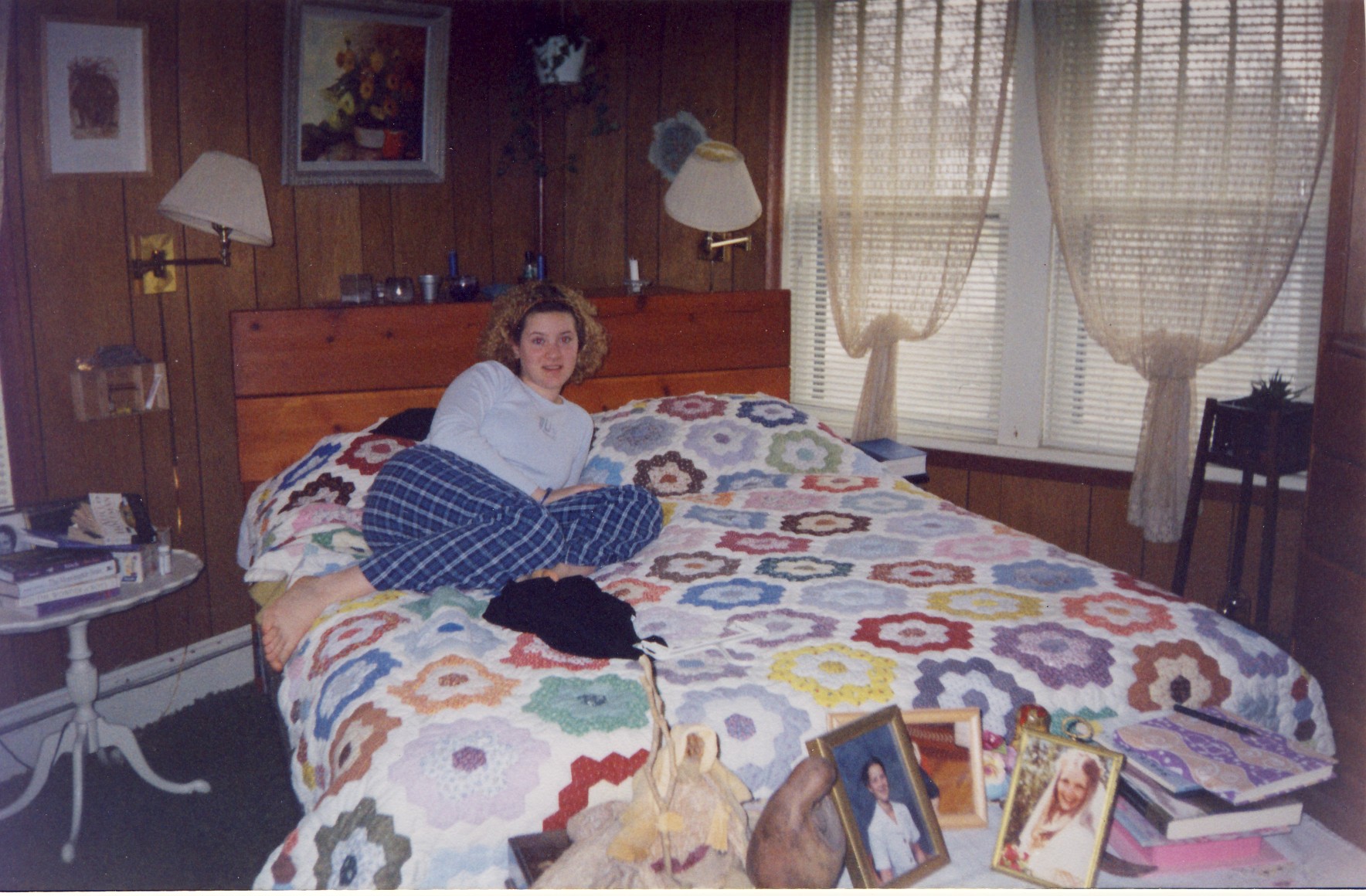
P.S. Turns out the hexagram is the symbol for the union of opposites. In alchemy, it represented the fusion of fire (upward triangle) and water (downward triangle), signifying the balance between masculine and feminine energies. This union was seen as essential for spiritual transformation and enlightenment. It’s also a talisman to ward off negativity (so I’m glad I sleep under it.) Metaphysically it is a tool to align higher aspirations with the physical world (so I guess that’s why I’m writing like mad.)

 𝑬𝒗𝒆𝒍𝒚𝒏 𝑾𝒂𝒓𝒅
What did this post stir up in you?